In the thirst of curiosity one day it took us to Menavali, a village 4 kms from Wai in Satara (Maharashtra). A historic significance of Wai is well known for its enchanting architectural styles of temples and palaces in the empire of Marathas.
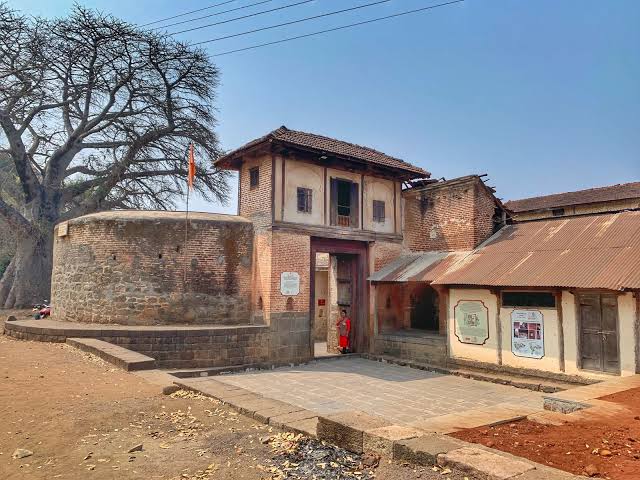
Once reached at Menavali, the marvelous hidden gem exposed in front of us and its “Nana fadnis Wada (Hisroric Palace)”.
The palace reveals its beautiful history era back to 17th century.In the path of Chhatrapati Shivaji Maharaj’s Hindavi Swarajya to Maratha Samrajya , Nana Fadnis(Fadnavis) is an important page in the history of Peshwas for nearly sixty years even after the battle of Panipat. This immensely intelligent and diplomatic personality has gained a respectable place in the list of those who ruled the state on condition.He had sensed the British threat to the Maratha power and started negotiations with the French to counter the British motives of expansion. During his lifetime, he was successful in keeping the British away from the Maratha Empire.
The palace hails scenic and powerful history of Maratha architectural history. The 250+ year old wada structure comprises of the main stone plinth above which rises the two storeyed wooden framed structures with walls made of bricks and dried mud, hay and lime mortar. The wada has some excellent specimens of art in the form of well-carved wooden ceilings, and cypress pillars with cusped arches and maratha style wall paintings, that are adorned with faunal and floral motifs.
In the outskirts of the palace, there is a huge tree with a broad trunk; this tree is called as “Kalpavruksha“. This tree is native to Africa. It is around 250 years old and has longevity of 1100 years. It has Hindu Mythological significance as “well-wishing tree“
A smart audio guide… “मी वाडा बोलतोय” in which the wada itself will narrate detailed information about the architecture, significance of each room in the wada, cultural events that took place here, some important incidents about Nana Phadnavis/Peshwai and much more. One can get a feeling of connection with history and culture while listening to the details of architecture of wada.
Moreover, visitors can feel connected with the “vaastu” by walking bare feet on the cool cow-dung floors and reliving the cultural events that took place in the wada. We can take home personalized souvenirs badges with their own name written on it in “मोडी ” script. मोडी was a script used to write Marathi for an estimated 700 years. All administrative paperwork of the Peshwas was carried out in the मोडी script.
Another significant attraction here is the victorious and mammoth bell in front of the Meneshwar Shiv temple. The bell is symbol of Maratha’s victory over the Portuguese in the battle of Vasai fort. It has an idol of mother Mary with baby Jesus (year engraved 1707 on Bell)and inscription in Latin with engravings “Praise the Lord with the sound made by this bell “.
At the back of palace, a peaceful beauty of Krishna Ghat can be experienced in the evening that will definitely soothe your mind and take you to the serenity. In the rush of survivng, it seems, we are secluding the places of our cultural glory where many intellectuals have been contributed towards building and strengthning our unique culture of India. We must hail and preserve them with
wholesome hands and pride.
Pics courtesy and editing : by Asmita Ghatge.
 TrendyBites
Leave a comment